
Virginia Dissolution Of Marriage Records
Virginia Dissolution Of Marriage records are public court documents held by circuit court clerks across the state's 95 counties and independent cities. If you need to search for a divorce filing, get a certified copy of a final decree, or verify that a dissolution of marriage took place in Virginia, this guide covers where to go, what to ask for, and how to find records online or in person.
Virginia Dissolution Of Marriage Overview
Where Virginia Dissolution Of Marriage Records Are Kept
Under Virginia Code § 20-96, circuit courts have exclusive jurisdiction over all suits for dissolution of marriage in the Commonwealth. That means every divorce case, from the initial complaint to the final decree, is filed with and maintained by the clerk of the circuit court in the county or independent city where the suit was brought. No other court level handles these filings.
The circuit court clerk is the official record-keeper. The clerk's office holds the full case file, which includes the complaint for divorce, any responsive pleadings, temporary orders, property settlement agreements, and the final decree of dissolution. If you want to review documents from the case or get a certified copy of the decree, the clerk's office in the filing jurisdiction is where you start. Virginia has 120 circuit courts spread across its 95 counties and 38 independent cities, and each one operates separately.
The Virginia Courts directory lists contact information, addresses, and phone numbers for every circuit court in the state. If you are not sure which court handled a case, the directory is a good first stop. You can also call the Virginia Courts public records office for guidance on where to direct your request.
The Virginia Department of Health also maintains a statewide index of dissolution of marriage records at the state level. Their office, located at 8701 Park Central Drive, Suite 100, Richmond, VA 23227, keeps vital records including divorce records going back decades. This office can issue a certified copy of a divorce record or a verification that a dissolution of marriage occurred in Virginia, but it does not hold the actual court case file.
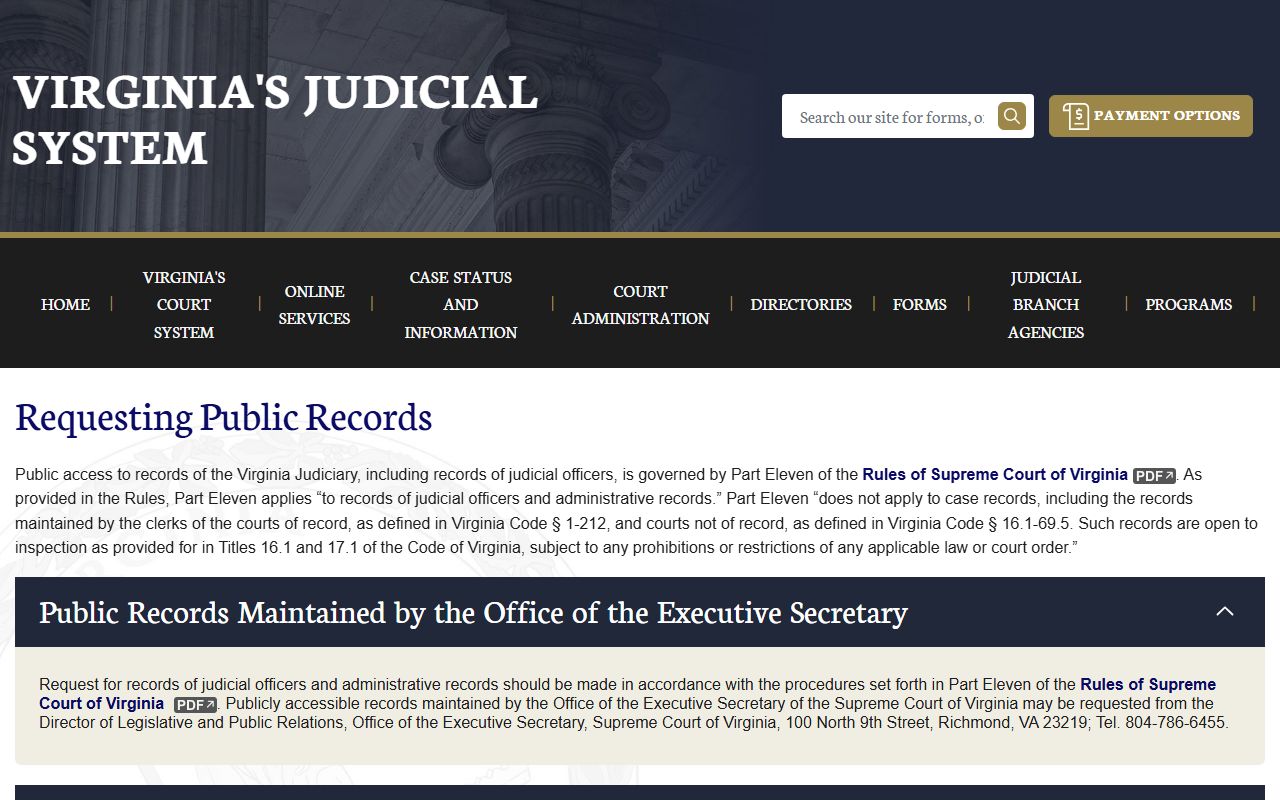
The Virginia Courts requesting public records page outlines the proper procedures for obtaining court records, including dissolution of marriage case files, from circuit court clerks across the state.
Searching Virginia Dissolution Of Marriage Records Online
Virginia provides two main online tools for looking up dissolution of marriage cases. The primary tool is the Circuit Court Case Information portal (CJISWeb). This statewide system lets you search by party name, case number, or hearing date across participating circuit courts. You can use it to confirm whether a dissolution of marriage case was filed, check its current status, see upcoming hearing dates, and review docket entries without going to the courthouse.
Keep in mind that not every circuit court in Virginia participates in CJISWeb. Some smaller jurisdictions have not yet integrated with the online system. For those courts, you will need to call or visit the clerk's office directly. The portal also does not display the text of filed documents or the final dissolution decree itself. It shows case metadata and status, not the actual paperwork.
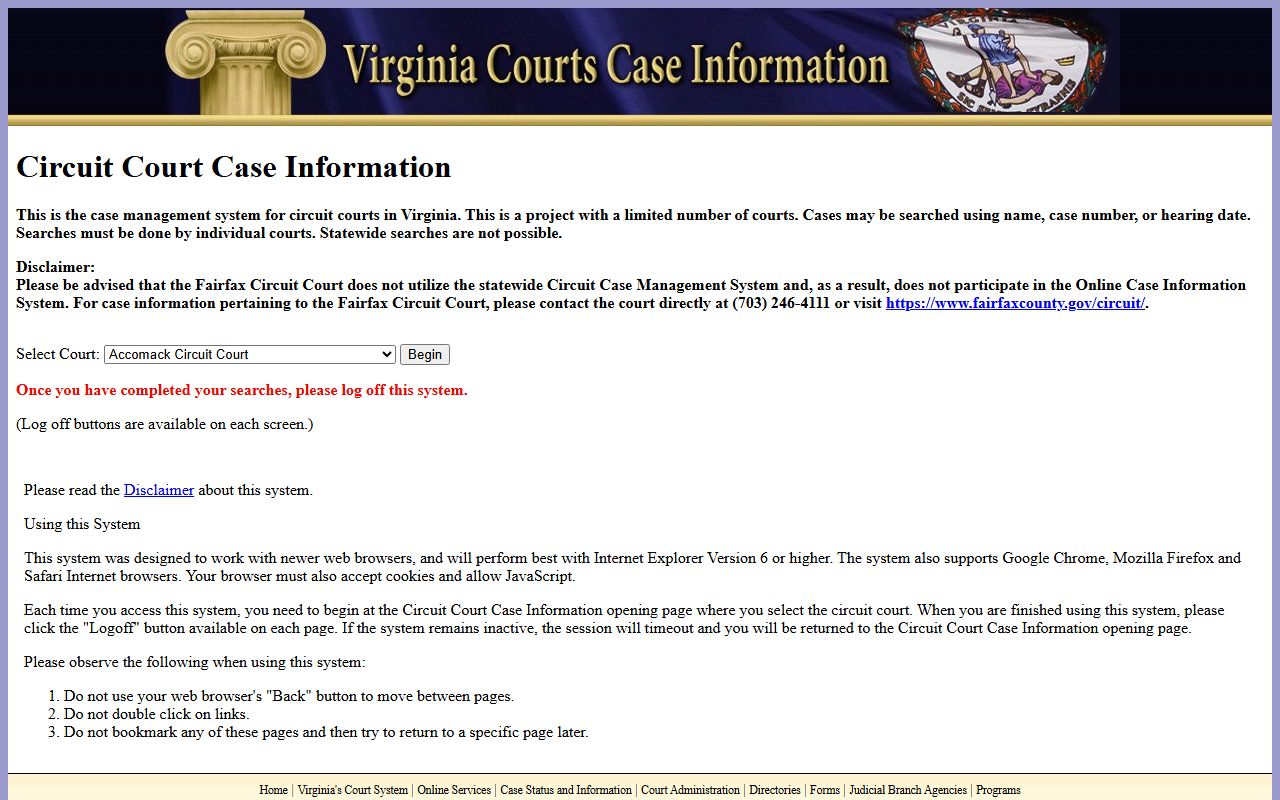
The CJISWeb circuit court portal allows the public to search active and recently closed dissolution of marriage cases by party name or case number across participating Virginia jurisdictions.
The second tool is the Online Case Information System (OCIS), which provides a statewide search across multiple court levels. It covers adult criminal cases in juvenile and domestic relations courts, general district courts, and select circuit courts. This system is less useful for dissolution of marriage records specifically, since divorce cases are exclusively circuit court matters, but it can help locate related domestic cases.
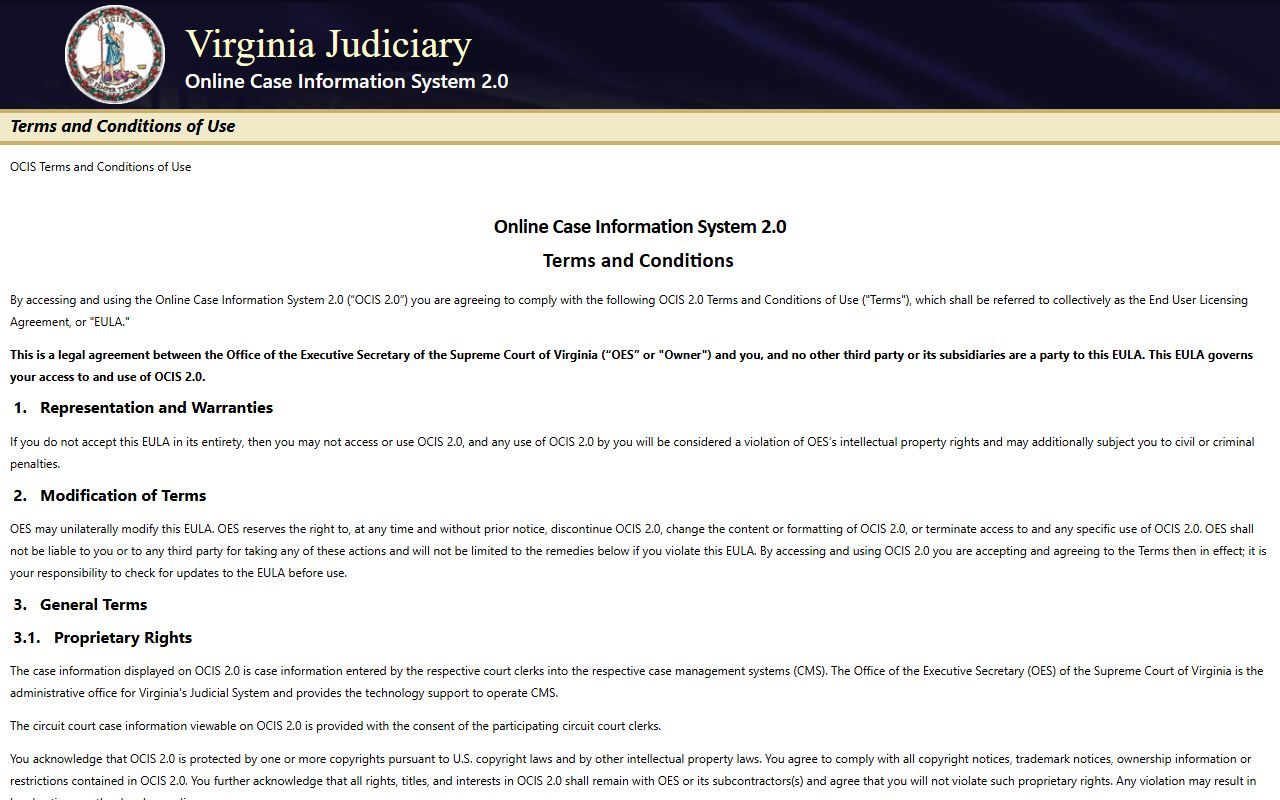
The OCIS statewide search portal aggregates case data across Virginia court levels, giving users a broader starting point when researching family law and related matters.
The Virginia Judicial System case information page also provides access to appellate-level case searches through the Supreme Court and Court of Appeals of Virginia. This is where you would look if a dissolution of marriage case was appealed from the circuit court level.
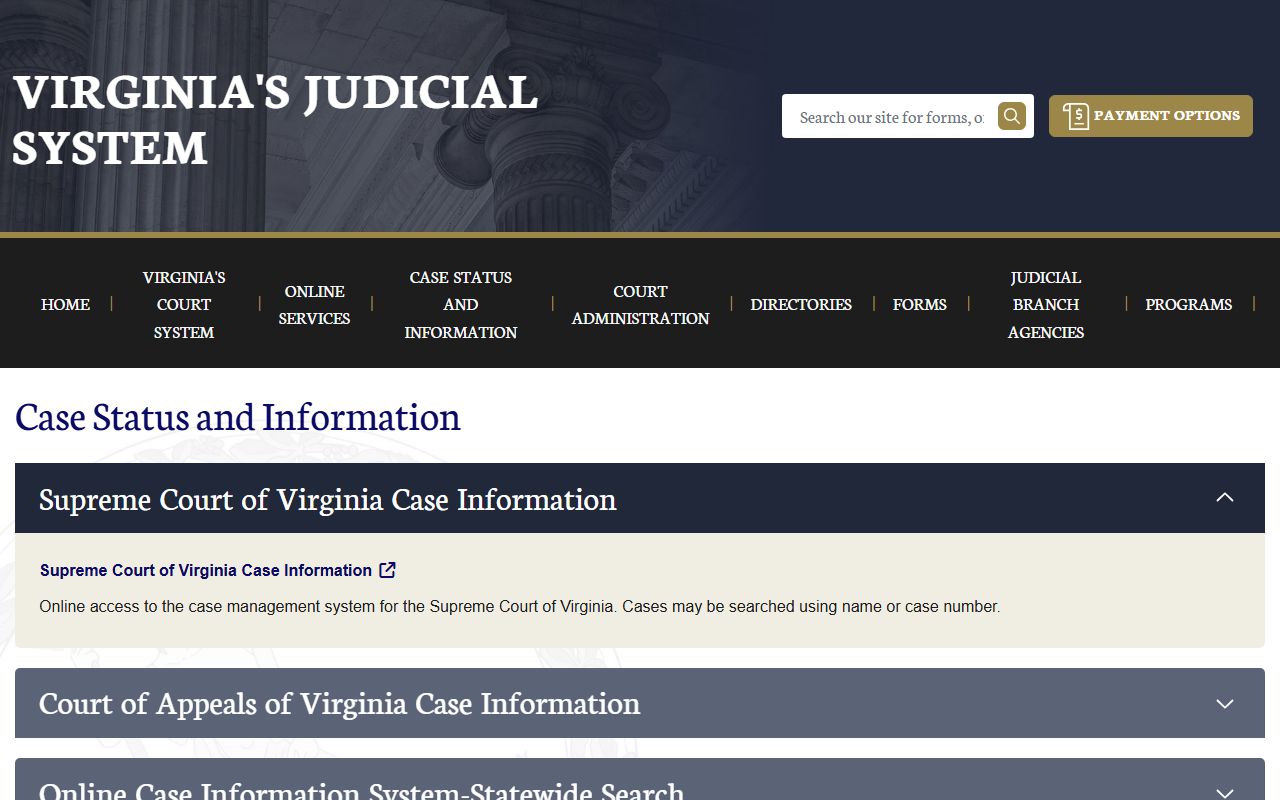
The Virginia Judicial System case status page offers searchable access to appellate court records, including any dissolution of marriage appeals heard by the Supreme Court of Virginia.
Note: Online case portals show case status and hearing dates but do not display the text of final decrees. To get a copy of the actual dissolution of marriage decree, contact the circuit court clerk directly.
VDH Vital Records: State-Level Divorce Copies
The Virginia Department of Health, Office of Vital Records, maintains a statewide index of dissolution of marriage records. This office can issue certified copies of Virginia divorce records for $12 per copy. That fee is non-refundable and must be paid at the time of the request. Payment options include check, money order, credit card, mobile pay, or cash for walk-in visitors. Checks and money orders should be made payable to the State Health Department.
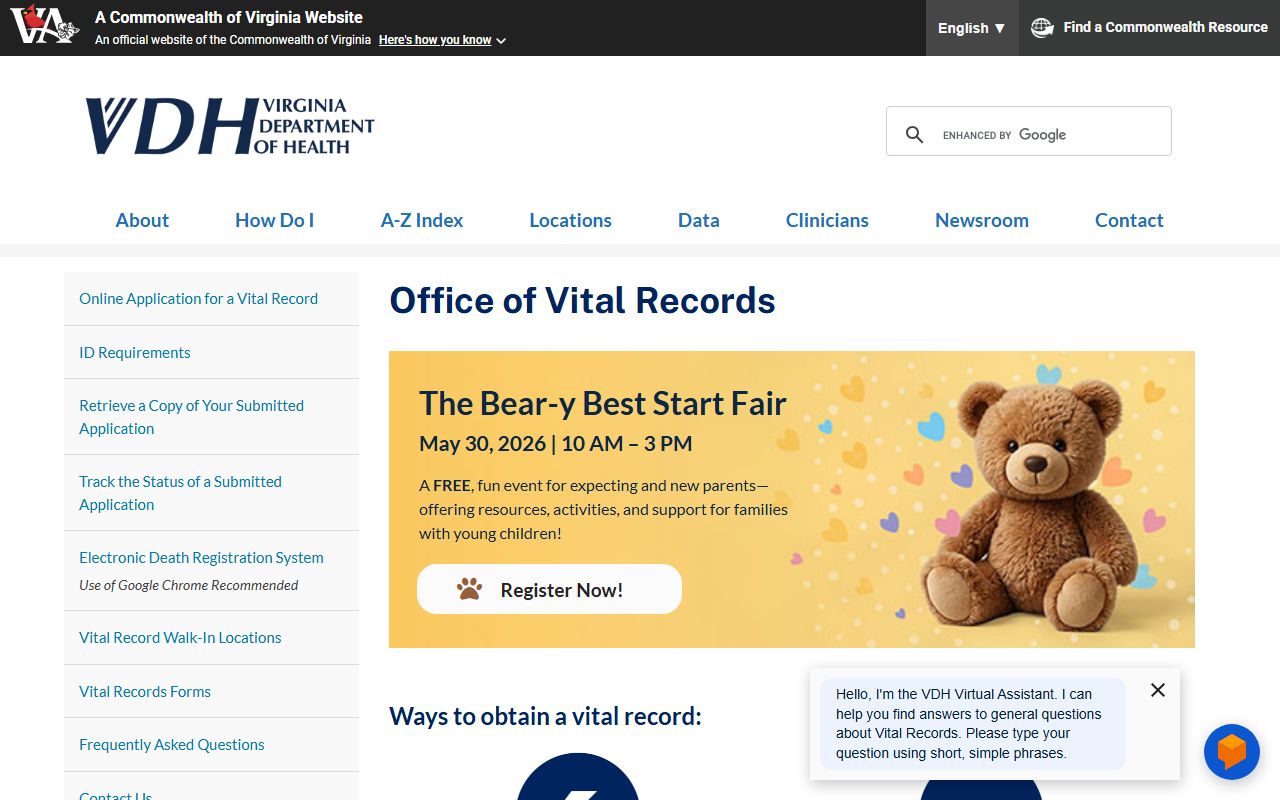
The Virginia Department of Health Office of Vital Records handles certified copy requests for dissolution of marriage records and other vital documents statewide.
Under Virginia law, dissolution of marriage records become public information 25 years after the event. Before that threshold, records are available only to immediate family members, including spouses, parents, children, and siblings, who can show valid government-issued ID. If you are not an immediate family member and the divorce occurred within the last 25 years, you will need to go directly to the circuit court clerk in the filing jurisdiction.
For records that are already public, anyone can request a copy from VDH without showing proof of relationship. The VDH online application portal accepts requests from any internet-connected device. It walks you through the form step by step and accepts electronic payment. Status updates are sent by email. Standard processing time is about two weeks from the date VDH receives the request, though express options are available for faster turnaround.
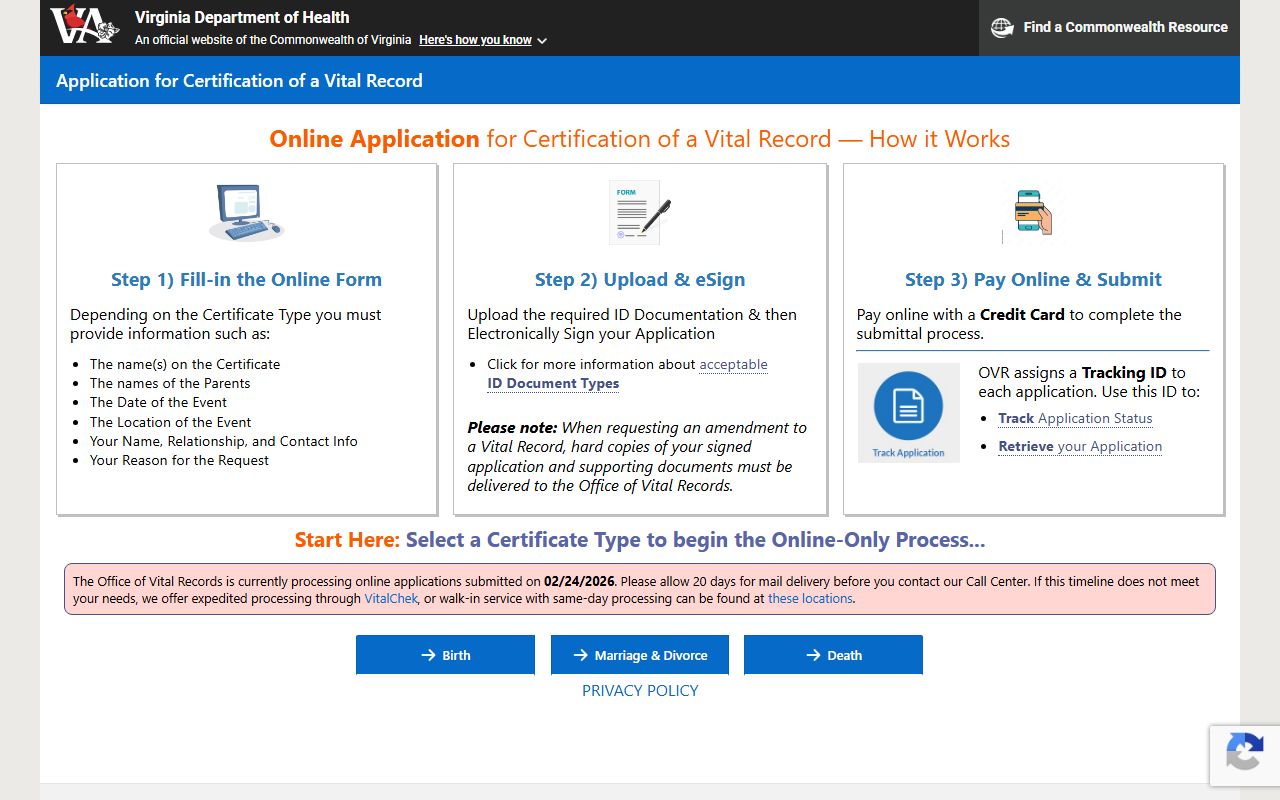
The VDH online vital records application allows eligible requesters to apply for certified dissolution of marriage copies from home and pay electronically.
You can also request by mail. Send your application, a legible copy of your government-issued photo ID, and the $12 fee to: VDH, Office of Vital Records, P.O. Box 1000, Richmond, Virginia 23218-1000. For questions, the Vital Records Customer Care Center can be reached at (804) 662-6200, Monday through Friday, 8:00am to 4:30pm. Walk-in visits are welcome at the physical office, which is open Monday through Friday, 7:00am to 4:00pm. Applications left as drop-offs must be left by 2:00pm for same-day logging. You can view the VDH fee schedule on their website.
Virginia Dissolution Of Marriage Law and Grounds
Virginia law governing dissolution of marriage is found in Title 20, Chapter 6 of the Code of Virginia. This chapter sets out all the rules: who can file, where to file, what grounds are recognized, how property is handled, and how the court enters the final decree.
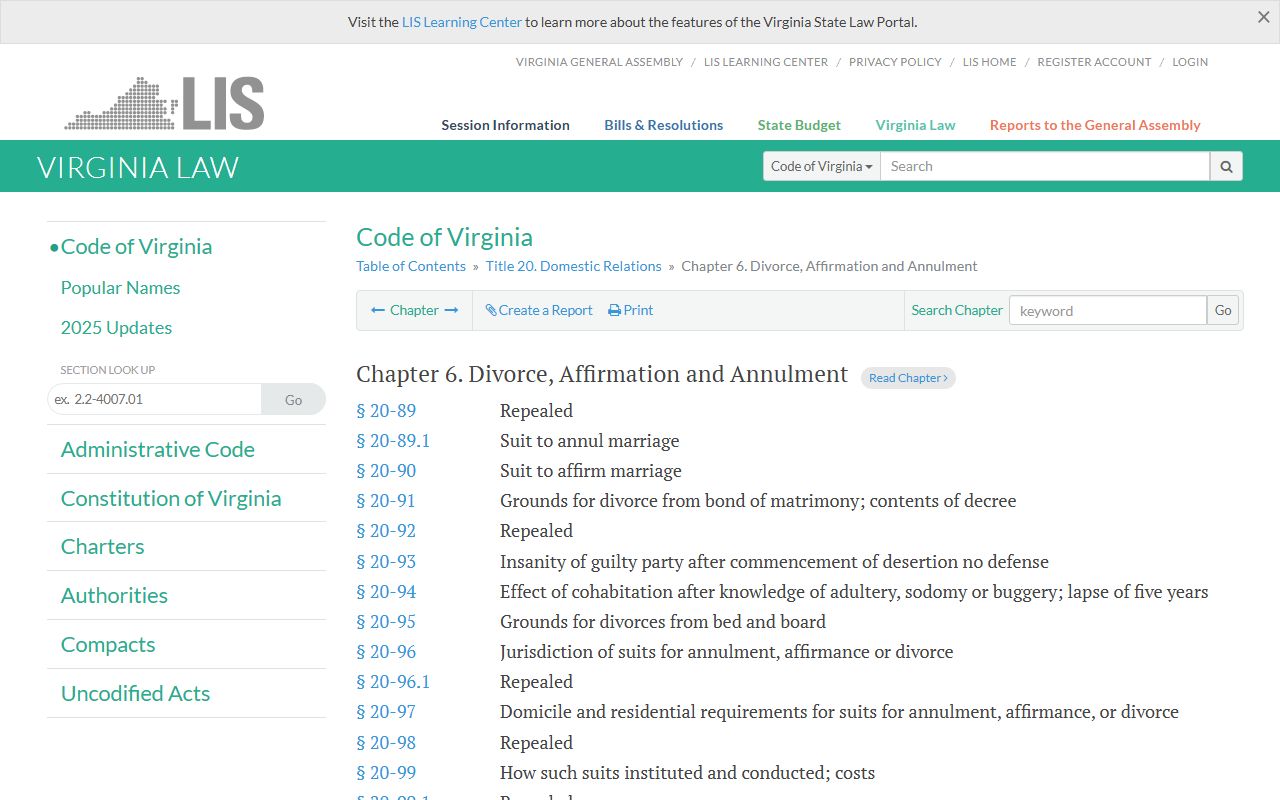
Title 20, Chapter 6 of the Code of Virginia is the complete statutory framework for dissolution of marriage, covering grounds, jurisdiction, residency, and decree requirements.
§ 20-91 lists the recognized grounds for dissolution of marriage in Virginia. The most common ground is no-fault: the spouses have lived separate and apart, without cohabitation and without interruption, for one year. If both parties have signed a separation agreement and there are no minor children from the marriage, that waiting period drops to six months. Fault grounds include adultery, felony conviction with confinement for more than one year, cruelty causing reasonable fear of harm, and willful desertion or abandonment for one year.
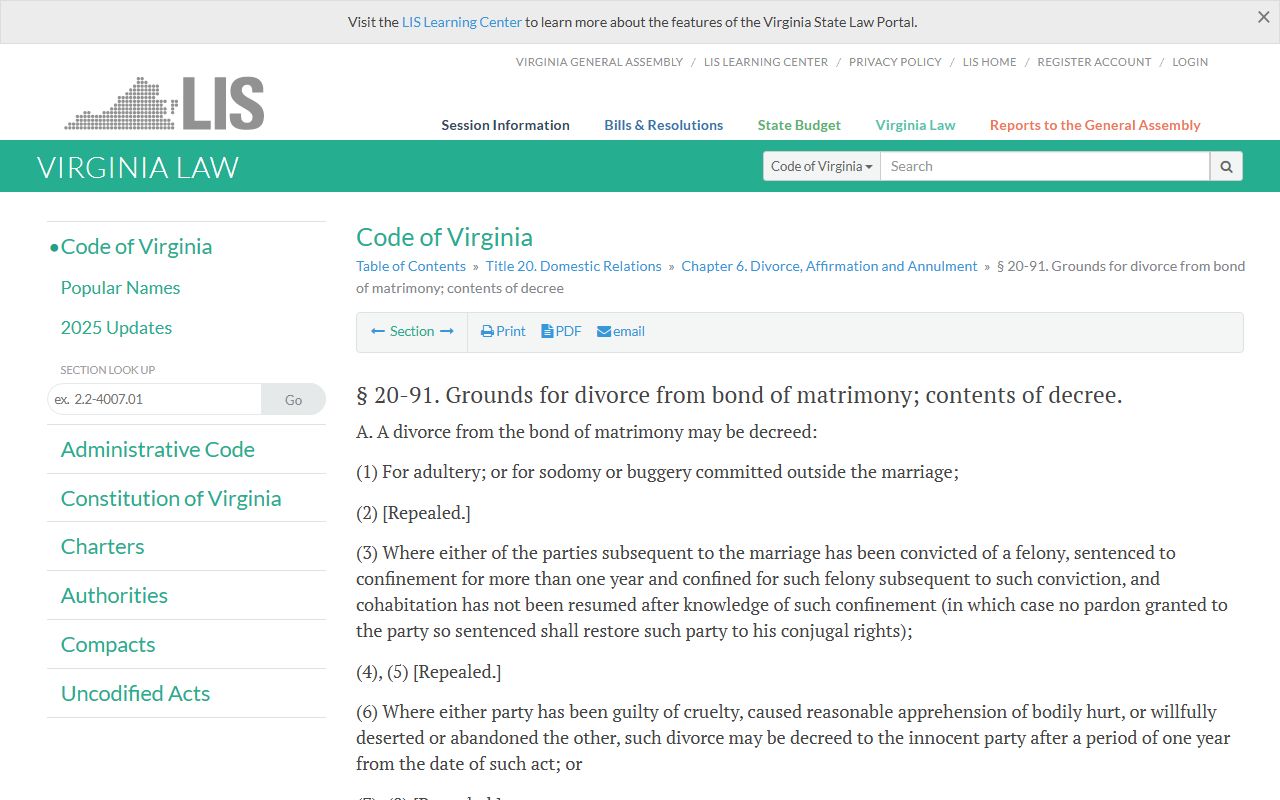
§ 20-91 of the Code of Virginia establishes the fault and no-fault grounds under which a circuit court may grant a dissolution of marriage decree.
Residency matters. Under § 20-97, at least one spouse must have been an actual bona fide resident and domiciliary of Virginia for at least six months before the suit is filed. Active duty military members stationed in Virginia for six months or more qualify under this rule as well, even if they claim domicile elsewhere.
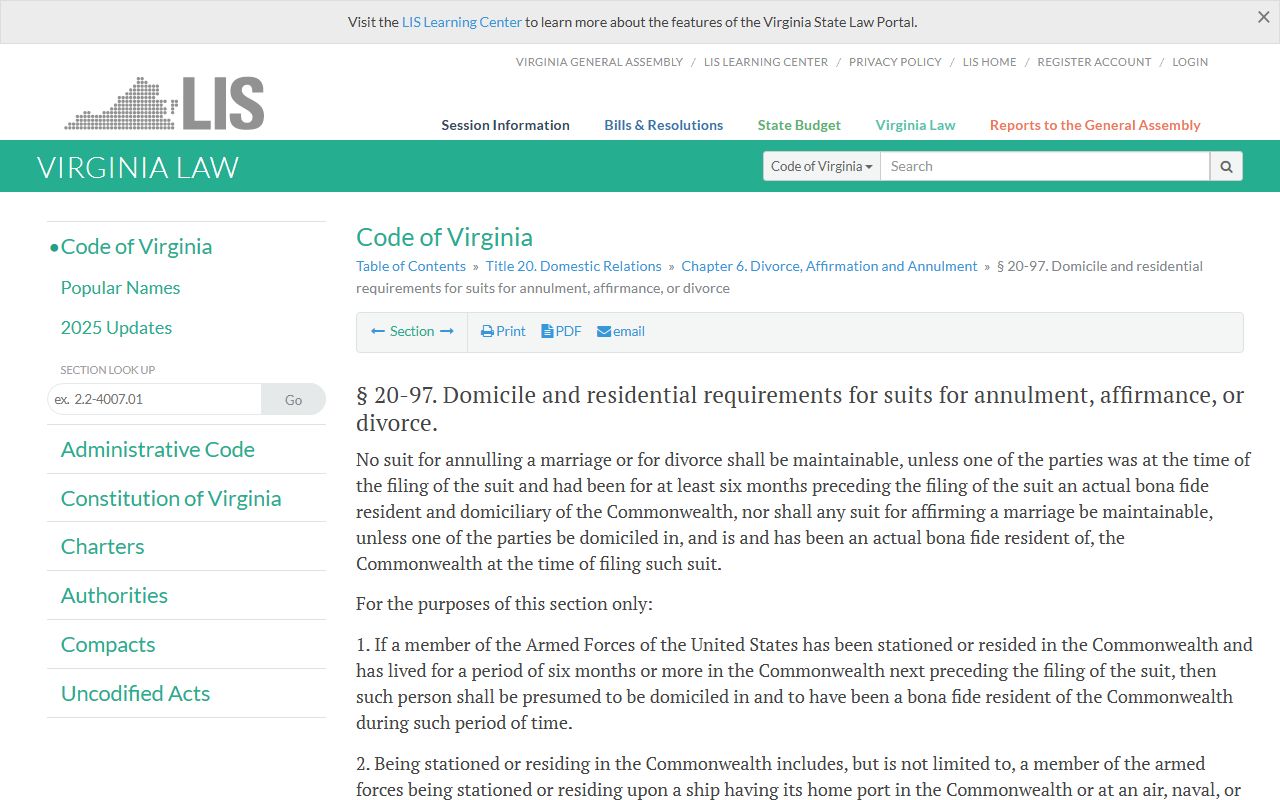
§ 20-97 sets the six-month residency and domicile requirement that must be met before a dissolution of marriage suit can be filed in Virginia.
Venue for dissolution of marriage suits is addressed in § 20-99. A case can be filed in the circuit court where the parties last lived together as a couple, where the defendant resides at the time of filing, or, if the defendant lives out of state, where the plaintiff resides. Filing in the right venue matters. Cases filed in the wrong court can be transferred or dismissed.
Public Access to Dissolution Of Marriage Case Files
Dissolution of marriage cases in Virginia are public records. Anyone can ask a circuit court clerk for access to a case file or for copies of documents from it. You do not have to be a party to the case. You do not need to give a reason.
That said, not everything in a case file is open. § 20-121.03 requires that identifying information in dissolution of marriage cases be kept in a confidential addendum, separate from the public record. This addendum holds social security numbers, financial account numbers, and similar sensitive data. It is accessible only to the parties, their attorneys, and certain government agencies. The decree itself remains public, but this personal identifying data is shielded from inspection.
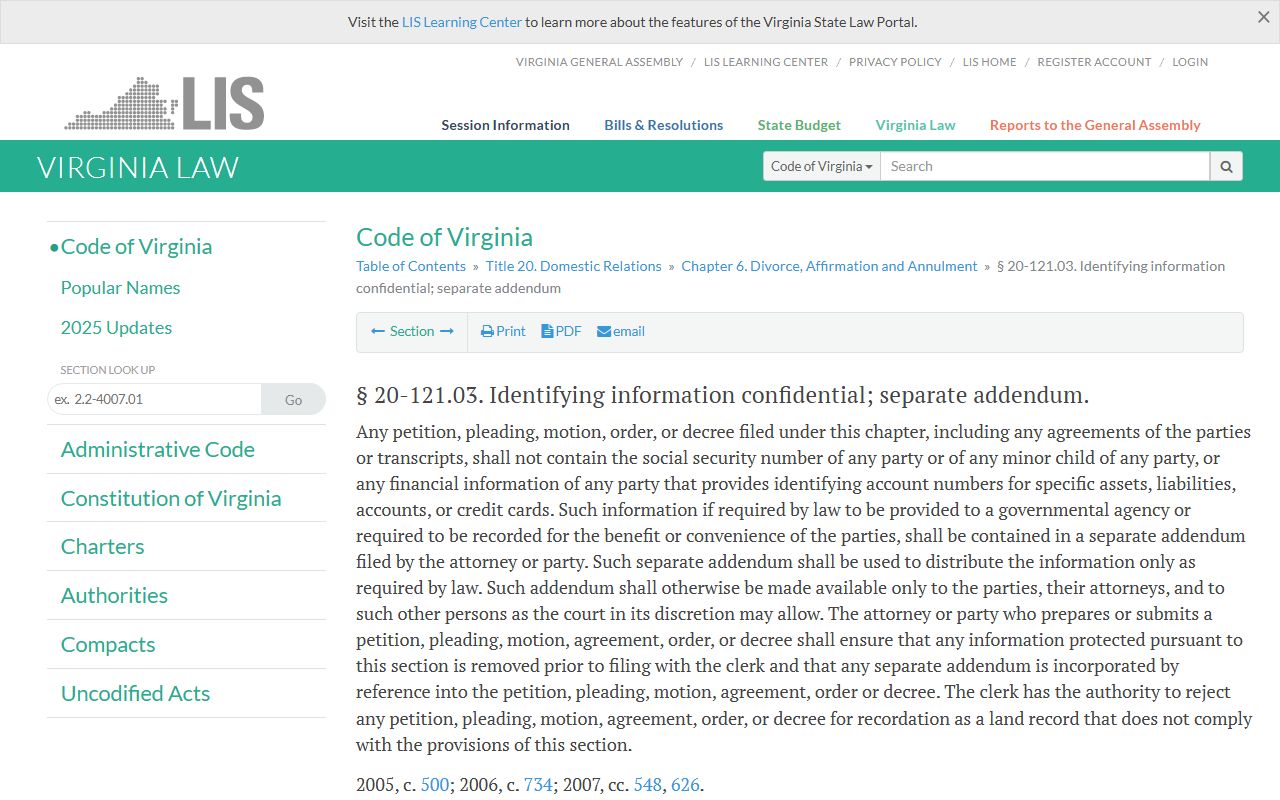
§ 20-121.03 mandates a confidential addendum in dissolution of marriage case files to protect social security numbers and financial account data from public inspection.
A party to a dissolution of marriage may also ask the court to seal certain documents. This is not automatic and requires the judge to find good cause. Most dissolution case files, however, remain fully open.
To get copies from a circuit court clerk, visit the clerk's office in person, call ahead to ask about mail-in procedures, or check the court's local website. Fees for copies vary by court, so it is worth calling first to ask the current rate. For the official framework governing public record requests from Virginia courts, see the Virginia Courts public records page.
Land Records and Property in Dissolution Cases
Dissolution of marriage proceedings often involve real property. Deeds, property settlement agreements, and related instruments filed as part of or after a divorce are recorded with the circuit court clerk's land records division. The Secure Remote Access (SRA) system through RISWeb provides online access to land records, including deeds, judgments, and wills, for participating Virginia circuit courts.
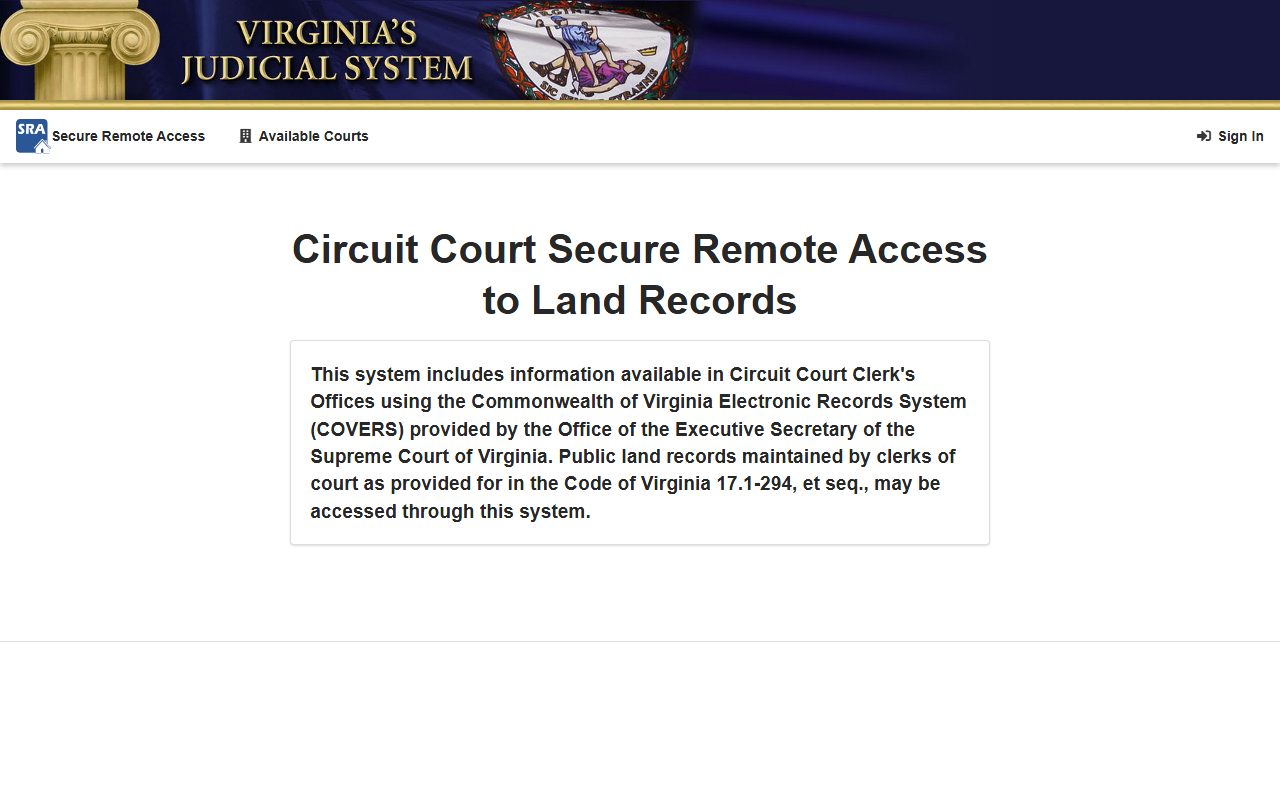
The Secure Remote Access system through RISWeb gives registered users online access to land records filed with participating Virginia circuit courts, including property documents related to dissolution cases.
Access to the SRA system requires registration with the local circuit court clerk. Once registered, users can search land records remotely and review instruments that may include property settlement documents tied to a dissolution of marriage. Registration requirements and fees vary by jurisdiction. Not every circuit court participates in SRA, so check with the specific court before trying to register.
Spouses going through dissolution may also want to monitor their property. The VADeed Alert service lets property owners register to receive email notifications when a document is recorded against their property in participating courts. This can help detect any unauthorized transfers during or after the dissolution process. The service is free and available through the RISWeb portal.
Dissolution Of Marriage Forms and Self-Help in Virginia
The Virginia Courts website hosts a full set of circuit court forms for dissolution of marriage cases. These are free PDF downloads, updated regularly as the law changes. Key forms include:
- CC-1414: Complaint for Divorce, the initial pleading used to start the dissolution action
- CC-1416: Final Decree of Divorce, the court's order formally ending the marriage
- CC-1418: Affidavit of Service, used to prove the complaint was properly delivered to the other spouse
You can download all these forms from the Virginia Courts circuit forms page. The site also provides instructions for completing and filing each form, along with information on how to serve the other party and what to expect at hearings. Spanish-language versions of many forms are also available.
For those handling their own dissolution case, the Access to Justice program is a valuable resource. It offers plain-language guides, video tutorials, and step-by-step instructions covering the full dissolution process from filing through entry of the final decree. Some courthouses also have self-help centers where staff can assist with procedural questions, though they cannot give legal advice. The program also connects people with local legal aid organizations for free or low-cost help. The downloadable circuit court informational pamphlet provides a general overview of how circuit courts operate and what to expect as a self-represented litigant.
Spousal Support and Child Support in Dissolution Cases
Virginia circuit courts can award temporary spousal support while a dissolution case is pending. This is called pendente lite support and is authorized by § 20-107.1. The court looks at each spouse's income and needs, the standard of living during the marriage, and the length of the marriage when deciding how much to award. This temporary order does not affect what the court may decide at the final stage.
When minor children are involved, child support is calculated under § 20-108.2, which sets the Virginia child support guidelines. The guidelines use both parents' combined gross income and the custody arrangement to calculate a base support amount. Courts can deviate from the guidelines only in limited circumstances, and any deviation must be explained in writing. After a dissolution decree is entered, child support enforcement is handled by the Virginia Division of Child Support Services (DCSS). DCSS can assist with income withholding, tax refund interception, and other enforcement tools.
Name Restoration and Other Dissolution Decree Provisions
A party to a Virginia dissolution of marriage can ask the court to restore a former or maiden name as part of the final decree. § 20-121.4 provides for this. The name change takes effect when the circuit court enters the dissolution decree. No separate court proceeding is needed. A certified copy of the decree is sufficient to update your driver's license, Social Security record, and other identification.
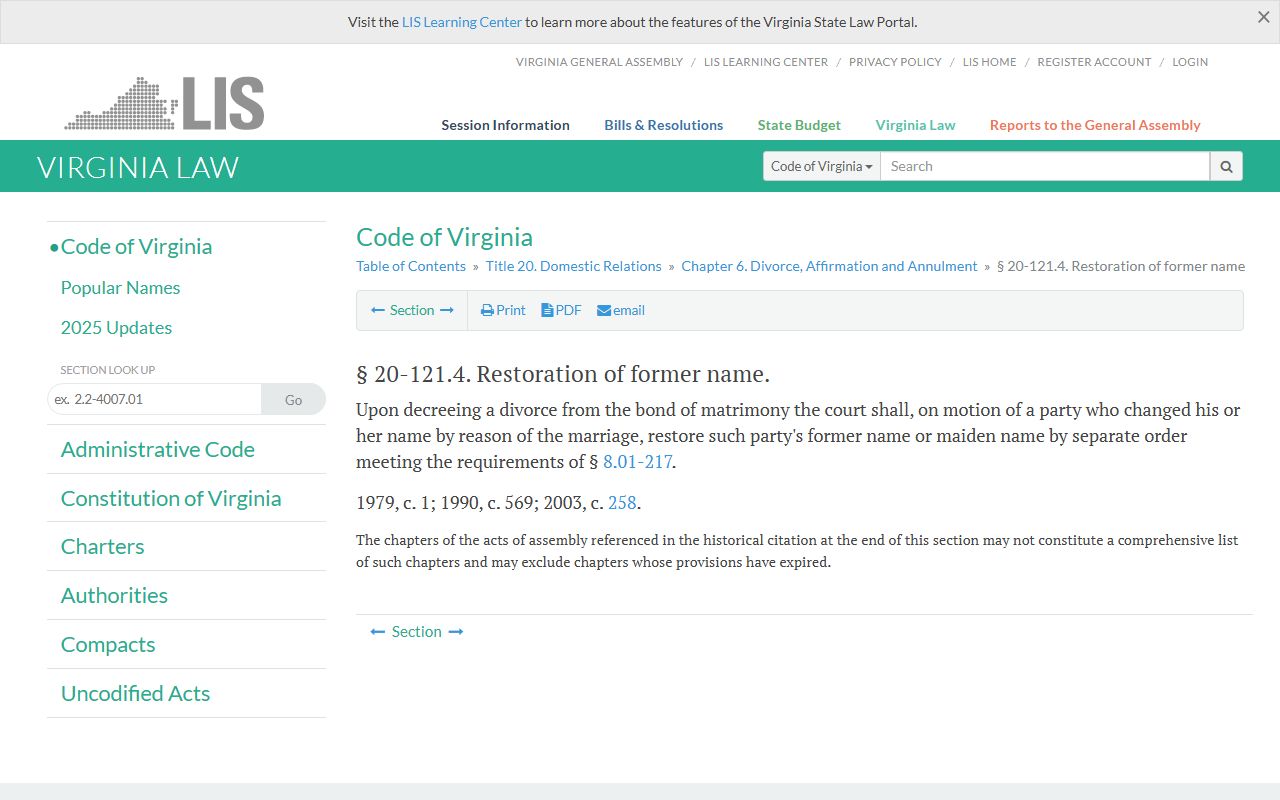
§ 20-121.4 allows a party to have a former name restored as part of the final dissolution of marriage decree, with no separate legal process required.
Every dissolution decree in Virginia must include each party's social security number or the control number from their DMV record, as required by § 20-91. This information feeds into state agency systems that track child support compliance and other post-dissolution matters. Though included in the decree, this information is moved to the confidential addendum under § 20-121.03 and is not part of the public record.
Browse Virginia Dissolution Of Marriage Records by Location
Virginia County Records
Each Virginia county has a circuit court clerk who maintains dissolution of marriage case files for that jurisdiction. Select a county below to find local court information, contact details, and search resources.
Virginia City Records
Virginia has 38 independent cities that each maintain their own circuit court and dissolution of marriage records. Select a city below to find contact information and search guidance for that jurisdiction.