
Charlotte County Dissolution Of Marriage Lookup
Charlotte County dissolution of marriage records are held by the Circuit Court Clerk in Charlotte Court House, the county seat. Whether you need to search for a divorce case, request a certified copy of a decree, or understand how marriage dissolution records are maintained in Charlotte County, this page covers the offices, online search tools, and Virginia statutes that govern proceedings in the 10th Judicial Circuit.
Charlotte County Overview
Charlotte Circuit Court Clerk
All dissolution of marriage cases in Charlotte County are filed with and decided by the Charlotte Circuit Court in Charlotte Court House. The court sits in the 10th Judicial Circuit of Virginia, shared with neighboring Buckingham County. Clerk of Court Hon. Annette Clowdis is the official keeper of all divorce decrees, annulment orders, and domestic relations case files in Charlotte County. The circuit court has exclusive jurisdiction over all marriage dissolution proceedings in the county under Virginia law.
For in-person requests, go to 115 David Bruce Avenue in Charlotte Court House. Bring the names of both parties, the case number if you have it, and an approximate date of the divorce. Staff can pull the file and make copies. The clerk's office also accepts requests by fax at (434) 542-4336. Call ahead to confirm current submission options and any copying fees, as procedures can change. In-person requests are generally processed faster than mail or fax submissions.
If you need post-decree documents such as modified support orders or enforcement orders entered after the original Charlotte County dissolution, those are also on file with the Charlotte Circuit Court Clerk. The clerk keeps the full case file permanently after the decree is entered.
| Clerk of Court | Hon. Annette Clowdis |
|---|---|
| Address | 115 David Bruce Avenue, P.O. Box 38, Charlotte Court House, VA 23923 |
| Phone | (434) 542-5147 |
| Fax | (434) 542-4336 |
| Hours | Monday - Friday, 8:30 AM - 4:30 PM |
The Charlotte Circuit Court page on the Virginia Courts website has current contact details, judges, and local court policies for Charlotte County.
Charlotte County Dissolution Records Online
Virginia's Circuit Court Case Information portal (CJISWeb) is a free public tool for searching civil cases in participating Virginia courts. You can look up Charlotte County dissolution of marriage filings by party name, case number, or hearing date. The portal shows case filing dates, status codes, party names, and hearing schedules for cases in the electronic system.
CJISWeb does not display the full text of divorce decrees or any filed documents. For those, contact the Charlotte Circuit Court Clerk directly. If a Charlotte County dissolution case is not in the online system, it may predate the court's electronic records. Older files may be on paper or microfilm at the courthouse. Call the clerk's office before making the trip to Charlotte Court House to confirm availability of historical records.
The Online Case Information System statewide search aggregates data from multiple court levels at once, including juvenile and domestic relations district courts. This is helpful if a Charlotte County dissolution matter has related protective orders, custody proceedings, or other cases filed in a different Virginia court.
The Virginia Courts site explains how to formally request court records in its guide to requesting public records from clerks of court. Charlotte County dissolution of marriage records are open to inspection under Titles 16.1 and 17.1 of the Code of Virginia, unless a court order restricts access to a specific file.
Note: When searching CJISWeb for Charlotte County cases, enter names as they appear in court documents. Nicknames or spelling variations may cause the search to return no results.
Charlotte County Vital Records and Certified Copies
The Virginia Department of Health Office of Vital Records keeps a statewide index of divorce records, including dissolution events from Charlotte County. VDH issues verification letters confirming the fact of the dissolution, the names of the parties, and the date and county where the divorce was granted. For many legal purposes, a VDH verification letter is sufficient.
VDH does not hold copies of court decrees or case file documents. For those, contact the Charlotte Circuit Court Clerk. VDH records are confidential for 25 years from the date of the divorce. During that time, access is limited to the parties themselves, their immediate family, or legal representatives with proper documentation. After 25 years, records become public and anyone may request them without proving a relationship.
To request a Charlotte County dissolution record from VDH, apply online, by mail, or in person at 8701 Park Central Drive, Suite 100, Richmond, VA 23227. The fee is $12 per copy. If the exact divorce date is unknown, VDH will search a five-year window for an added fee. Call (804) 662-6200, Monday through Friday, 8:00 AM to 4:30 PM, with any questions. Mail requests usually take about two weeks from receipt. Include a clear copy of your photo ID with every request.
For genealogy research, Charlotte County dissolution records more than 25 years old are publicly available and may be requested by anyone. If a very old record does not appear in VDH files, the Charlotte Circuit Court Clerk's historical archives may have the original case documents.
Virginia Dissolution Laws Affecting Charlotte County
All dissolution of marriage proceedings in Charlotte County are governed by Virginia statutes. Under Virginia Code Section 20-96, circuit courts have exclusive jurisdiction over divorce, annulment, and affirmation of marriage. Every Charlotte County case must be filed with the Charlotte Circuit Court in Charlotte Court House.
The grounds for divorce in Virginia are listed in Code Section 20-91. Fault grounds include adultery, cruelty, desertion, and felony conviction with imprisonment. For a no-fault divorce, the parties must live separate and apart without cohabitation for one year. If there is a written separation agreement and no minor children, that period is reduced to six months.
Under Code Section 20-97, at least one party must be a bona fide resident and domiciliary of Virginia for at least six months before filing. Military members stationed in Virginia for six months or more are presumed to satisfy this requirement. Venue rules under Section 20-99 allow the suit to be brought where the parties last lived together, where the defendant resides, or where the plaintiff resides if the defendant is a nonresident.
Section 20-121.4 lets a spouse request a name restoration in the divorce decree. That change takes effect when the Charlotte Circuit Court enters the final order. Personal identifiers in Charlotte County dissolution records are protected under the confidential addendum system established by Section 20-121.03, as explained below.
What Charlotte County Dissolution Records Contain
The official case file at the Charlotte Circuit Court Clerk's office includes every document filed during a dissolution of marriage proceeding. This covers the complaint, responsive pleadings, motions, temporary orders, any settlement agreement, and the final divorce decree. These files are open to public inspection unless a court order seals a specific record.
Sensitive personal data is kept in a separate, protected addendum. Under Virginia Code Section 20-121.03, Social Security numbers, driver's license numbers, dates of birth, and financial account numbers must be placed in a confidential addendum filed apart from the public portion of the record. The Charlotte Circuit Court Clerk stores this addendum securely. Only the parties, their attorneys, and authorized government agencies may access it.
Any public copy of a Charlotte County divorce decree will not include the protected identifiers from the confidential addendum. For most legal purposes, such as a name change, passport application, or remarriage, the public decree is enough. If confidential data was placed in the wrong part of the Charlotte County file, a motion to correct the record must be filed with the court.
Charlotte County land records may also be relevant if real estate was divided as part of a dissolution settlement. Quitclaim deeds or deeds of conveyance tied to a property transfer in a divorce can appear in the land records division of the Charlotte Circuit Court. The Secure Remote Access to Land Records system may allow online searching if Charlotte County participates. Contact the clerk's office to confirm access and registration requirements.
Legal Help for Charlotte County Dissolution Cases
The Virginia Courts website has a library of circuit court forms, including forms for divorce and separation. Self-represented parties in Charlotte County can use these forms but must still follow all court rules and procedures. Reading the instructions carefully before filing with the Charlotte Circuit Court is essential.
The Access to Justice program helps Virginia residents connect with reduced-cost or free legal help. This is a useful starting point if you are unsure whether you qualify for legal aid or want to find a Charlotte County attorney for a dissolution case. For contested matters, the Charlotte Circuit Court may require mediation or a judicial settlement conference before the case goes to trial. The clerk's office can explain how to request these options.
The Virginia Courts directory has current contact details for all circuit courts in Virginia. Check this directory before traveling to Charlotte Court House or mailing documents to the clerk, since hours and contact information can change.
Note: Records in Charlotte County that need to be used abroad may require authentication or apostille processing. Contact the Charlotte Circuit Court Clerk for information about that process and any associated fees.
Charlotte County Court Record Images
The Virginia Circuit Court Case Information system is a free public tool for searching dissolution of marriage filings in Charlotte County and other participating courts across Virginia.
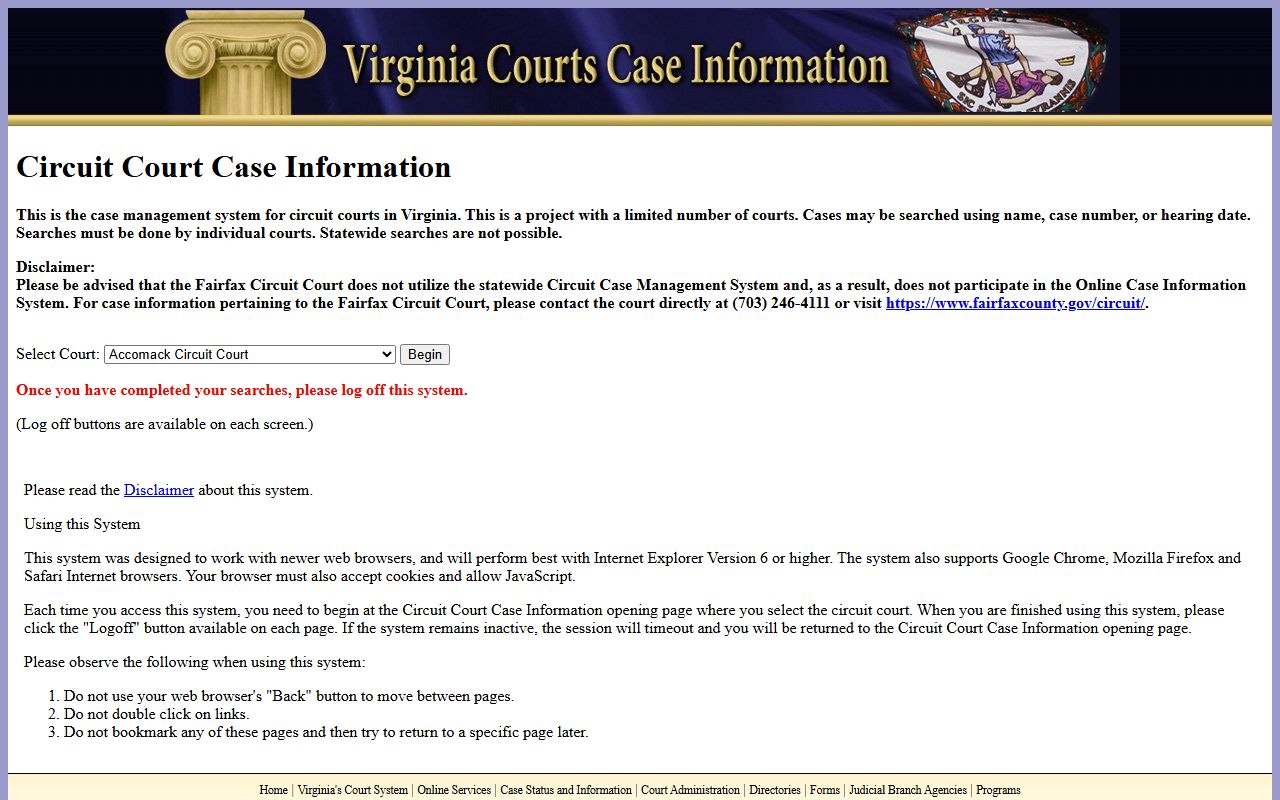
The CJISWeb portal displays case status codes, hearing dates, party names, and related case numbers for Charlotte County dissolution of marriage cases that are in the electronic system.
The Virginia Courts site provides guidance on requesting public records from clerks of court, covering what documents are open and how to request Charlotte County dissolution records by mail or in person.
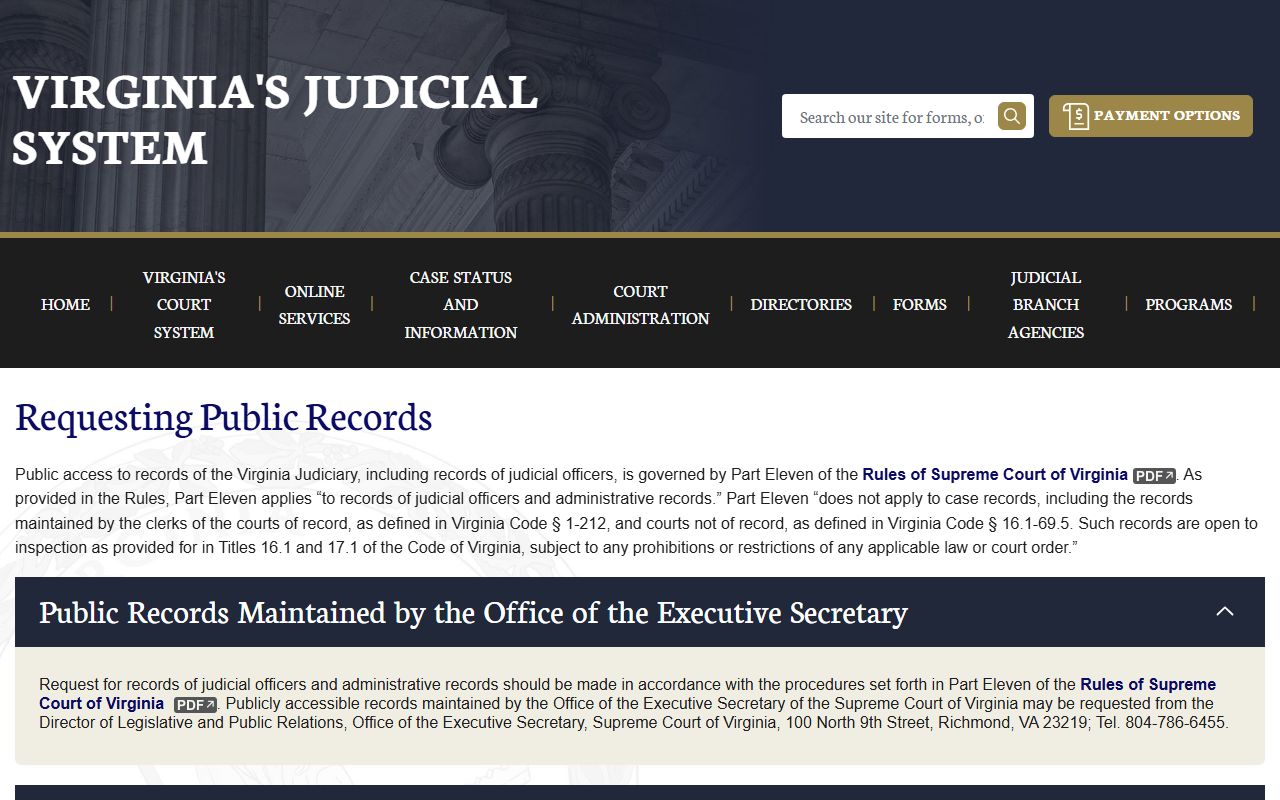
This guide explains the steps for obtaining nonconfidential divorce records from the Charlotte County Circuit Court Clerk, including what information to include in a records request.
The Virginia Department of Health Vital Records office keeps the statewide divorce index and issues verification letters for dissolution events that occurred in Charlotte County.
VDH letters confirming a Charlotte County dissolution of marriage are often enough for legal purposes such as remarriage or a name change application.
The Charlotte Circuit Court page on the Virginia Courts website provides current clerk contact information, judges, office hours, and local court policies for Charlotte County.
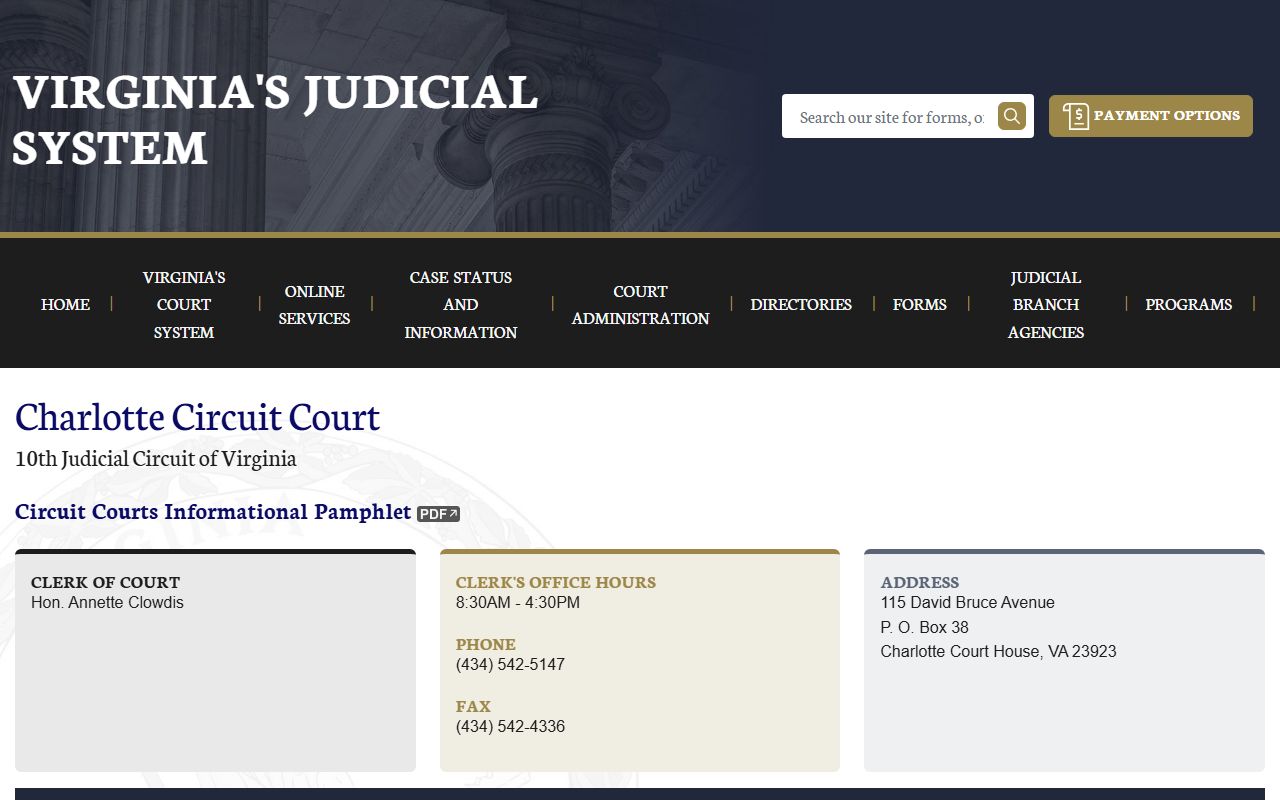
Visit this page before contacting or traveling to the Charlotte County courthouse to confirm current procedures for accessing dissolution of marriage records.
Cities Near Charlotte County
Charlotte County is in the Southside Virginia region. Nearby qualifying cities with dissolution of marriage resources include the following.
Nearby Counties
Charlotte County borders several Southside and Piedmont Virginia counties. Each has its own Circuit Court Clerk handling dissolution of marriage records.