
Williamsburg Dissolution Of Marriage Records
Williamsburg dissolution of marriage records are held by the Circuit Court Clerk for Williamsburg and James City County. If you need to search for a divorce case, get a certified copy of a decree, or find out how a dissolution was handled in this city, this page points you to the right offices and explains each step. Williamsburg is an independent city in Virginia, so its court system operates separately from any surrounding county.
Williamsburg Overview
Williamsburg Circuit Court Clerk
The Circuit Court for Williamsburg and James City County handles all dissolution of marriage cases filed in this jurisdiction. Under Virginia Code Section 20-96, circuit courts have exclusive jurisdiction over divorce and annulment proceedings. The clerk of court is the official keeper of all divorce decrees, domestic relations case files, and related court orders for Williamsburg.
To get records in person, visit the courthouse and bring the names of both parties, the approximate date of the divorce, and the case number if you have it. Staff can help you find the file. The clerk also accepts requests by mail, so call ahead to confirm what they allow and what fees apply for certified copies.
The Williamsburg-James City County Circuit Court page on the Virginia Courts website has current contact details, office hours, and any local procedural notes. Check that page before you make the trip or send anything by mail.
For contested dissolution cases, the court may schedule several hearings before the final decree is entered. These can include temporary support hearings, discovery conferences, and settlement conferences. The clerk's office handles the case file throughout. If you need to modify or enforce a decree after it is entered, you must return to the same circuit court.
Search Williamsburg Dissolution Records Online
Virginia's Circuit Court Case Information portal (CJISWeb) lets you search civil cases, including dissolution of marriage filings, in Williamsburg and other participating courts. You can search by party name, case number, or hearing date. There is no fee to use the portal.
The portal shows basic details: the case number, filing date, party names, hearing dates, and status codes like "Decreed" or "Dismissed." It does not show the full text of a decree or any filed documents. For those, contact the Williamsburg Circuit Court Clerk directly. Keep that in mind when you use the online search.
The Online Case Information System statewide search pulls data from multiple court levels at once, including juvenile and domestic relations district courts. This can be useful if a dissolution matter in Williamsburg has linked protective orders or other proceedings filed in a different court. It covers circuit, general district, and J&DR courts in one search.
When searching CJISWeb for Williamsburg cases, enter names exactly as they appear on court records. Nicknames or minor spelling differences may cause the search to return nothing. If a case does not show up, it may predate the electronic system or may be sealed. In those situations, contact the clerk's office directly.
Note: The CJISWeb portal covers circuit court civil cases only. Protective orders and custody matters filed in the juvenile and domestic relations court will not appear in this search.
Vital Records and Certified Copies
The Virginia Department of Health Office of Vital Records keeps a statewide index of divorce records, including dissolutions that took place in Williamsburg. The VDH issues verification letters that confirm the fact of a dissolution, the names of the parties, and the date and place the divorce was granted. These letters are often enough for legal purposes like remarriage or a name change.
The VDH does not hold copies of actual court decrees. For the full decree or case file documents, you must contact the Williamsburg Circuit Court Clerk. VDH records are private for 25 years after the divorce date. After that period, anyone may request them. During the 25-year window, only the parties, immediate family, or legal representatives with proper documents may get copies.
You can apply online through the VDH vital records online application. The fee is $12 per copy. You can also mail requests or visit the VDH office at 8701 Park Central Drive, Suite 100, Richmond, VA 23227. The customer care center at (804) 662-6200 is open Monday through Friday, 8:00 AM to 4:30 PM.
If the exact divorce date is unknown, VDH will search a five-year window for an added fee. Express processing is available for faster turnaround. Mail requests typically take about two weeks from the date received. Include a clear copy of your government-issued photo ID with any request.
Virginia Dissolution of Marriage Laws
All dissolution of marriage cases in Williamsburg are governed by state law. Code Section 20-91 lists the grounds for divorce, including both fault-based grounds such as adultery, cruelty, desertion, and felony conviction, and no-fault grounds based on separation. For a no-fault divorce, parties must live separate and apart for one year. If there is a written separation agreement and no minor children, the period drops to six months.
At least one party must meet the residency rule set by Code Section 20-97. That means being a bona fide resident and domiciliary of Virginia for at least six months before filing. Members of the Armed Forces stationed in Virginia for six months or more are presumed to meet this rule. The Williamsburg Circuit Court will not accept a case if neither party meets the residency standard.
Venue rules in Code Section 20-99 say the suit may be brought where the parties last lived together, where the defendant lives, or where the plaintiff lives if the defendant is a nonresident. For most Williamsburg cases, the local circuit court is the right venue. Section 20-121.03 requires that sensitive identifying information be kept in a confidential addendum separate from the public decree.
What Williamsburg Dissolution Records Include
The official case file kept by the Williamsburg Circuit Court Clerk includes every document filed during the dissolution proceeding. This covers the complaint, responsive pleadings, motions, orders issued during the case, any settlement or separation agreement, and the final divorce decree. These files are open to public inspection unless a court order restricts access.
One part is not public. Under Virginia Code Section 20-121.03, all identifying information including Social Security numbers, driver's license numbers, dates of birth, and financial account numbers must be placed in a confidential addendum filed separately from the public decree. The clerk stores this addendum securely. Only the parties, their attorneys, and certain government agencies may access it.
If you request a divorce decree from the Williamsburg clerk, the copy you receive will not include information from the confidential addendum. For most legal uses such as a passport application, name change, or remarriage, the public decree is all you need. If confidential information was placed in the wrong part of the file, a motion must be filed with the court to correct it.
The land records division at the Williamsburg Circuit Court may also hold deeds tied to a dissolution proceeding. If a property settlement was part of the divorce, quitclaim deeds or other conveyance instruments related to that settlement should appear in the land records. The Secure Remote Access to Land Records system allows registered users to search these records online if the court participates. Contact the clerk to ask about registration.
Legal Help for Williamsburg Dissolution Cases
If you are filing for dissolution in Williamsburg and need help, several resources are open to you. The Virginia Courts website has a library of circuit court forms for divorce and separation cases. Self-represented parties can use these forms but must follow all court rules and procedures on their own.
The Access to Justice program connects people with reduced-cost or free legal help in Virginia. This is a good starting point if you are not sure whether you qualify for legal aid or need help finding a local attorney. For contested dissolutions, the court may ask the parties to try mediation before the case goes to trial. Mediation can save time and lower costs.
The Virginia Courts public records guide explains how to request nonconfidential records from any clerk of court in the state. It covers what documents are open, how to submit a request, and what fees may apply. Use this guide to understand your rights before you contact the Williamsburg clerk.
Williamsburg Court Records and Images
The Virginia Circuit Court Case Information system is a free public resource for searching dissolution of marriage filings in Williamsburg and other participating courts across the state.
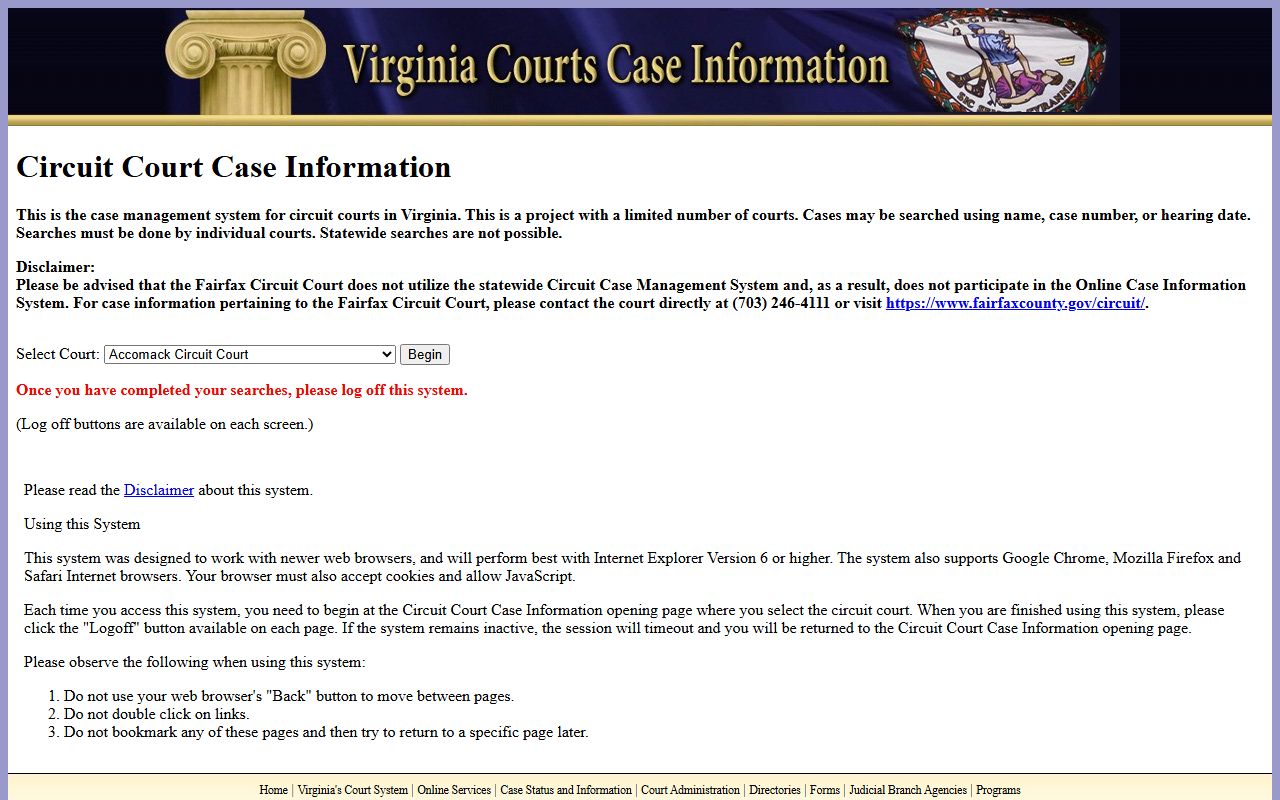
The CJISWeb portal displays hearing dates, case status codes, party names, and related case numbers for active and recently closed Williamsburg dissolution of marriage cases.
The Virginia Department of Health Vital Records office maintains the statewide divorce index and can issue verification letters for dissolution events that occurred in Williamsburg.
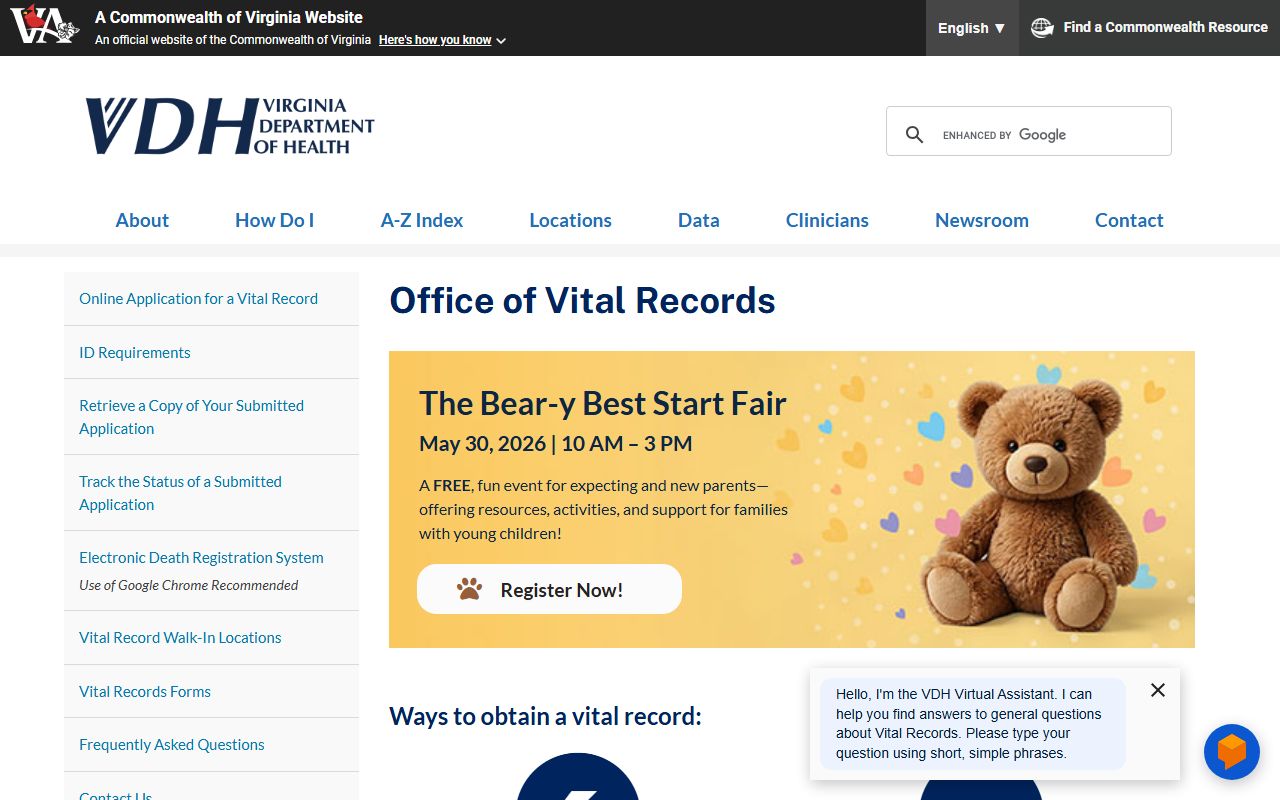
VDH verification letters show the names of the parties, the date of the dissolution, and where it was granted, which is often enough for legal uses like remarriage or a name change.
Nearby Cities
Williamsburg is surrounded by other independent cities in the Hampton Roads and Peninsula regions of Virginia.
Nearby Counties
James City County and York County are adjacent to Williamsburg and have their own circuit courts for dissolution of marriage cases filed in those jurisdictions.